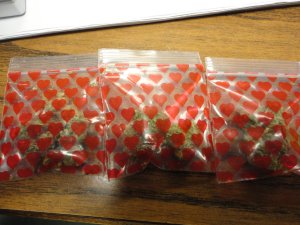
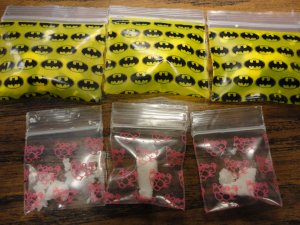
Heart packaged marijuana seized prior to Valentine's Day
By Washington County Tennessee Sheriffs Dept.
February 14, 2012: According to Sheriff Ed Graybeal, Investigators arrested Cynthia Yong Bowman, #4 Lexington Court, Gray; after observing her outside her apartment. Investigators held active Criminal Court Presentments on Bowman at the time. Investigators removed Bowman from her vehicle after observing her carry several bags from her residence and place them inside the vehicle.
Investigators smelled a strong odor of marijuana coming from around the driver's seat area of the vehicle. A cursory search of that area revealed a container with several prepackaged heart covered baggies of marijuana, and Batman covered baggies of crack cocaine, along with over $1500 in cash.
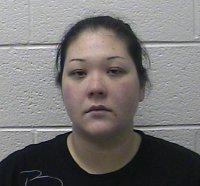
Cynthia Yong Bowman
Bowman was transported to Washington County Detention Center while Investigators obtained a search warrant to allow them to search her apartment. Inside the apartment Investigators recovered several more baggies of marijuana, digital scales, paraphernalia used in the packaging of the illegal drugs; illegally diverted prescription pills including Oxycodone, Hydrocodone and Morphine Sulphate pills.
Bowman's Criminal Court bond was $75,000 with her Criminal Court date scheduled for the Next Term of Washington County Criminal Court.
Bowman's additional charges of Possession of Schedules II & VI, Possession of Drug Paraphernalia, and Maintaining a Dwelling Where Controlled Substances are used and Sold was set at $31,000 for a total bond of $106,000. Her arraignment in Sessions Court is scheduled for today. Bowman is currently housed in the Washington County Detention Center.
- Single Motherhood and Not Racism is the Problem
- Profile of a Stupid Single Mother
- Drug Testing for Welfare Recipients May Become Law in Virginia
- Poverty a Complicated Issue Bristol Virginia-Tennessee
- Researchers get $705,000 to study stressed-out birds
Last is most recent.
Illegal Immigration-Crime
Mexican Crimewave in Johnson City
Local Crime 1 Local Crime 2
Local Crime 3 Local Crime 4
- Black Gang Arrested for Rape Laugh at Judge
- 58 Meth Convections Illustrate Problem in Tri-Cities
- Jails and New Laws Won't Stop Meth Epidemic
- Crime is Up Across Wise County Virginia
- Impaired Driver Faces Felony Drug Charges in Johnson City
- Another 48 People Nailed in Bristol Virginia Drug Bust
- Break Light Leads to Drug Bust for Black Male
- Robbery Suspects Run Down Washington County Tennessee Deputy
- Black Male Opens Fire at Kingsport Waffle House
- Crime by Race in Tennessee
- Crime and Violence on Indian Reservations
- Inconvenient Truths about Race & Slavery
- The Holocaust by Rabbi Meir Kahane
- Why Rabbi Kahane was Right by Lewis Loflin
- Poverty and Guns Doesn't Equal Gun Crime