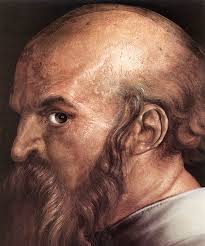
What is the goal of the Ebionites?
FAQ from www.ebionite.org.
We have several related goals:
The promotion of monotheistic Yahwism (Judaism).
The promotion of this to gentiles
The restoration of the good name of Yahshua ben Yosef as a righteous Jew
This necessitates the deconstruction of the mythological "Jesus" of Christianity, disproving that Christianity is a biblically related religion.
Social justice based on honesty, and love in the context of the Bible (Tanak).
What the Ebionites are not.
There are a number of Christian derived fringe groups who have misrepresented themselves as Ebionites. They are often "Pentecostal" "non-denominational," "right-wing" conservative, anti-government, anti-authority, and apocalyptic if not gnostic. They commandeer the name Ebionite to further another extremist agenda.
Some of these groups maintain relations with other extremist groups, and began as extremist Christians. Their current incarnation is often just a modification of the former state.
Don't be misled by others calling themselves Ebionites. This website is the total representation of the Ebionite Community under the authority of the Ebionite Paqid. And the Ebionite Community represents the Ebionite faith today.
If you have questions concerning someone representing themselves as Ebionites, or the standing of a person to represent the Ebionite Jewish Community, contact us.
Are the Ebionites Jews?
Judaism is a type of Yahwism that became highly developed subset of the Biblical religion described in the Hebrew Bible (called "Old Testament" by most Christians). It began in earnest a little before Christianity did. People of the tribe of Judah (Y'hudah) with remnants of other tribes of ancient Israel returned from captivity in Babylonia, and so Yahwism came to be represented by these Yehudim ("Jews").
In a broad sense, anyone practicing a version of ancient Yahwism today are referred to as "Jews" and in that sense, Ebionites are a type of "Jew," but more specifically Ebionites are a type of Yahwist, embracing the ancient covenant of circumcision and covenant "Law."
There is no single type of Yahwism today. Most people are familiar with the "rabbinic" variety of Yahwism. But there are other varieties, most notably the Qaraites (Bnai Miqra, or Karaite Jews) and the Evyonim.
Are the Ebionites Christians?
We are in no way Christian or supportive of Christianity. We consider Christianity to be a type of Mystery Religion devised by Paul of Tarsus and others. We believe that there is no relationship between Christianity (actually better described as Paulism) and the man Christians refer to as "Jesus." For that matter, since Christians often claim that "Christian" means Christ-like (that is like "Jesus"), it is most unfortunate that there are few who could honestly make that claim.
Some scholars categorize the ancient Ebionites as Christian or Jewish-Christian. That description is unjustified and untenable. In fact there is no such thing as a Jewish-Christian just as there are no Muslim-Christians.
Do Ebionites believe in Jesus?
Depending on what you are actually asking, the answer varies. If you are of the fundamentalist Christian belief, I will save time for you, and say, No, we do not believe in Jesus.
Jews, and anyone who believes in the existence of God as presented by the Bible (Tanak) cannot possibly believe that there is more than one god; and believing that God was birthed from between the legs of a human mother and sacrificed himself to himself for another person's sins, dying, is not only absurd, but an insult to the intelligence God gives at least some humans.
While such ideas appealed to the pagan Greeks and Romans, and other superstitious peoples who were raised on fables of gods having intercourse with mortal women to produce semi-divine offspring (to cover up the products of adulterous human affairs), Jews would never accept such nonsense. Jews are able to handle only one God at a time.
Do Christians really believe in such things?
On the other hand, from what can be reconstructed after demythologizing the gospel and removing the fabrications of later gentile scribes, Jesus can be seen as teaching many good things worthy of emulating. And this is what he himself asked his followers to concentrate on. It did not matter what honors they paid him if they did not follow his teachings he thought. And his teachings were those of a Jew who was expecting the end of the world as Jews knew it, and hopefully the beginning of an age under the Jewish Messiah.
But truth be told, Jesus has been made into something very disgusting and pagan by Christians, and very dishonored by them. The closest religion to the teachings of Jesus has always been biblical Judaism, and embracing Judaism is the best way to embrace Jesus.
Was Jesus the Messiah?
Jesus was not the Messiah. There is no Reign, no Kingdom of God on earth. Christians have a problem of putting emphasis on people, but it is a bad practice by anyone to put so much importance on an individual whether it be a Christian or Jewish sect.
We feel that the important thing is every person's relationship to God and in the Messianic Age the best relationship will be realized for the entire world in a time of wisdom, peace, and the knowledge of Yahweh and His commandments. Jesus knew this and wanted to see this age come also.
He realized that the way to bring this age was to devotion to God and our fellow man and not in force of arms, strife and hate. Today most Jews believe that righteousness on the part of Israel will signify that mankind is ready for the Messianic Age, and speak of "bringing the Messiah."
This is what Jesus wanted to do also. And so do we. And in that sense, the work of Jesus was messianic, and wherever he succeeded he was acting as a messiah---but was not the Messiah who will actually begin that Age.
This was one of the problems Christians had with Ebionites in ancient times. They criticized us for the belief that anyone could be a messiah. They were fixated on an individual, not the Reign.
They did not understand that Yahweh empowers individuals only in that they help bring His desires to fruition to aid His children. Jesus was empowered to try to convince people to look to God and repent and prepare for the Reign of God. Instead Christians made Jesus into an idol.
What is the historical basis for teachings of the Ebionite Movement?
The basis for modern Evyonut is found in a number of ancient witnesses. The most important is the descriptions found for Ebionites in the writings of the Muslim historian Abd al-Jabbar, the Torah, the negative comments of Christian church fathers concerning the Ebionites, and information disguised in the Christian New Testament. They are further supported by historical Jesus studies which is rediscovering what the Ebionites have always known about Yahshua.
What does Evyonim mean?
One of the Biblical Hebrew words for "poor," as also descriptive of a powerless, oppressed, humbled person, is 'evyon. 'Evyonim is the plural of 'evyon. In ancient Israel there seems to have always been the matter of class and class victimization just as it exists today. There are the "haves" and the "have nots" who are often taken advantage of by the "upper class." Yahshua ben Yosef preached against the well-to-do who looked down on and oppressed those "beneath" them.
Yahshua started a reform movement in Judaism based on social justice in a religious, Torah observant context. The followers of this movement later became identified as Evyonim/Ebionites. Yet there were always 'Evyonim in the social sense, and Yahshua drew on the experience of these people, reaching out to them as the core of his movement. The Ebionites today are continuing in the same approach to Yahwism.
Who is Yahshua?
The man known to most as "Jesus of Nazareth" was, of course, a Jew. Jesus is not a Hebrew (Jewish) name, but an attempt to bring the sound of his Hebrew name across to Greek, Latin, English and other languages. Hebrew does not even have an English "j" sound (In modern Hebrew, foreign loan words with that "j" sound must be represented with a "g" and a stroke next to it. Not only that, but "Jesus" was "Iesus" pronounced yay-soos, up through the time of the Authorized Version, or "KJV.")
His name consists of two elements, as most Hebrew name do. The name of the Eternal, Yahweh in combination with the word shu`a meaning to deliver or save. This name has a number of forms, another being Y'hoshua or Yehoshua.
Some prefer an Aramaic rendering, Yeshua or Y'shua. We prefer Yahshua because it's easier to say and combining Yah with shua (or using Y'hoshua) has a different meaning than Yeshua (which can be construed as "he saves" used by Christians to say Jesus was God). Only God saves, not Jesus.
We use an originally Hebraic form, Yahshua most often, to express that this man was Jewish in every way, and that his teachings, understandings, and god are not Western or Christian. It is all Hebrew, all Jewish, and very, very little of that has been understood.
What is Yahwism?
The religion of the Bible is based on covenant made with a single god. The god of Avraham, Isaac (Yitshaq), and Jacob (Ya`aqov) who spoke to Moses (Moshe) describes Himself as YHWH. In many English (Christian) Bibles, He is represented by the word LORD. Yet the Hebrew letters this English word tries to represent is YHWH (the Hebrew letters yod-heh-waw-heh).
Today most scholars vocalize this as Yahweh, and the short form of the name (Yah) can be seen in many biblical names, for example Yesha'yah ("Isaiah") and Eliyah ("Elijah"). The religion of belief in the Hebrew god, although He is the god of all and sustainer of all, can be referred to as Yahwism.
Are Christians Yahwists?
We do not believe that they are Yahwists. Yahwism calls for strict monotheism which totally excludes the possibility of Yahweh becoming a man or dying, or a trinity consisting of different parts or beings like a "father, son, holy ghost."
The trinitarian belief is one originating in pagan religion. People who believe that "Jesus" is God or part of a triune god, or that there can even be a triune god do not understand or accept Yahwism---that is they are not in the faith of the god of Israel, YHWH.
What is pagan?
Pagan describes a religious practice or view not coming from the Bible (i.e., non-Yahwistic), and can describe people who embrace such things. We believe that such things are displeasing to Yahweh.
Originally pagan was an old Latin word denoting a superstitious, ignorant, country person. (Most of us are "country" people, and we do not believe that the words "ignorant" and "country" are synonymous!)
What do you mean when you say Bible?
When Ebionites say "Bible" they mean the Tanakh, what most call the "Old Testament." Tanak is an acronym of T, N, and K---that is, the combination of the Torah (also called the Five Books of Moses, Pentateuch, or Humash), the Nevi'im (or, Prophets), and the Ketuvim (the Writings which include the Psalms, Proverbs, and others). The popular term currently is The Hebrew Bible, but is the sum total of the sacred scriptures. Another word used is Mikra (also Miqra).
It includes none of the writings that Christians have added to the Bible as their "New Testament." Actually, the first Christians used only the Bible (Tanakh) and did not have what they would call a "new testament" for centuries after Yahshua, although some writings that would be included in their book were circulated early on.
There can only be an "old" testament when someone invents a "new" one. And so that idea of an "old" testament is simply a Christian invention, and a devious invention at that. What Christians call the "Old Testament" is the only testament. We call only that testament the Bible.
Many Christians today resent the idea that the Book of Mormon is "another testament of Jesus Christ" and some see such an idea as a dangerous deception. The Ebionites see an addition of the so-called Christian New Testament to the Hebrew Bible in the same way many Christians would reject the idea that scripture should include the Book of Mormon. The Book of Mormon is not scripture, and neither is the Christian New Testament part of sacred scripture. Ebionites reject both of these erroneous works.
You don't care much for Christians, do you?
We apologize if it sounds like this. There are many people more critical to Jews than Christians, and we enjoy great freedom in Western traditionally Christian nations. We are a part of those nations. So if there were Ebionites in predominantly Islamic nations or Hindu nations, or what ever the case could be, that would become the matrix for complaints.
And I personally thank God that a nation such as mine exists where I have not been killed for my beliefs, and where I have relative freedom to verbalize my beliefs. This would likewise be true of most European and English-speaking nations where Ebionites are found.
There has been a long and close relationship between Christianity and Judaism. In times past it has not been a very good one, and millions of Jews have suffered the most horrendous ends. But enlightened Christians and Deists from Christian backgrounds brought about havens for people of all religions here in the United States of America and elsewhere during the Age of Reason.
We respect the right of every person to understand life in their own way. This is why you will not see us at your door handing you tracts, or entering religious meetings to interrupt them and "preach" our religion in your place of religion.
And we will never threaten you with demons or hellfire for not agreeing with our beliefs! Instead, we deposit the information where you can find it when you want it. You will find that most Ebionites do not missionize and even avoid talking too much about our faith unless we are asked.
And you should not ask if you really do not want to enter into an extensive subject for which you may not be prepared. We feel no obligation to educate you or "save" you. You are not damned for not being a Jew or Jewish Ebionite.
When Ebionites are critical of another religion it is on a real-life, societal basis. We think the Torah offers a superior way of life and just value system, and we insist that value system preserves and enhances life by our interpretation of it. Not just our lives, but yours also. So what is criticized here is the things we see as being detrimental to you and ourselves.
For Ebionites there is a difference between Christians and Christianity. We look at Christians as individuals just as we look at anyone no matter if they are Christian, Muslim, Hindu, Wiccan, or any other religion. And not only that, but we believe that every person that pursues righteousness and loving kindness has a place in the World-to-Come (`olam ha-ba'), the time of peace and new creation which Christians call Paradise. Yahweh is a righteous Judge who wants good for all His creation.
But we do not care much at all for the Christian religious system and its doctrines. It is a mixture of many pagan ideas and beliefs and mostly unscriptural. But also Christianity is false and dangerous in many ways. Historically Christianity, supposedly a religion based on love, has murdered millions of people.
These millions include not just Jews and others who refused to convert to Christianity, and those who dared stand in the way of Christian greed for power and territory, but Christians of rival sects as well. Christianity has developed false values and goals which has enabled it to wreak this havoc with impunity, and claims it does it for God. It is not a good religion and it is not a religion of God. We refer to Christianity as Dat Kazav (or Daka).
Most Christians are born into the Christian culture, and brainwashed in churches, schools, and media. Christianity is anti-intellectual and discourages real thought. Most Christians are victims, not adherents. They simply do not know any better. People like this can be very frustrating because they do not even realize how victimized they are. So although there are fine individuals and even pitiable persons who just happen to be Christians, Christianity itself is worthless to us as a faith.
Unfortunately, the same cultural conditions that create Christians also pressure and eventually bring persecution to anyone who does not conform to their mores.
We want Christians and all gentiles to come to know and worship God (Yahweh) and enter into covenant with Him.
Also keep in mind that Ebionites have never instituted crusades, inquisitions, pogroms, massacres, public humiliations, trials and tortures, or holocausts, against Christians as Christians have Jews and others. We do not blackball people, deny them employment for Sabbath observance, or engage in racial segregation. But we know and love many Christians who are kind, and humane.
What is "Dat Kazav"?
Dat Kazav (Lying Religion, or Religion of Falseness) is a Hebrew term Ebionites use to describe Christianity that comes from the 'ish kazav (Lying Man, i.e., Liar) Paul of Tarsus. Daka is an acronym (technically a Hebrew abbreviation Da"Ka) of Dat Kazav. In Hebrew daka is also a verb meaning to oppress; to victimize; to tyrannize.
Can Christians be saved?
First there is a question to answer, saved from what? Since this usually refers to the Christian belief in a eternal fire to punish everyone who does not agree with them, and since this idea is not biblical but instead borrowed from pagan religion (particularly Zoroastrianism) by a few syncretistic Jewish sects (such as the Essenes and some mediaeval Jews' belief in a purgatory) and Paulism, the question becomes more difficult.
So the question of "being saved" is a Christian question asking something concerning their own doctrinal invention to be explained by a non-Christian person who does not see any basis for the Christian belief or the Christian religion.
It would be like asking a Christian how many lives did they have until they became a (Buddhist) "bodhisatva."
If we take the Christian approach (we don't), we would say that all Christians will burn in "hell" because they disagree with our beliefs. But we do not believe that. Every person will have to stand in judgment before Yahweh on his own actions. But without reservation, Ebionites do not believe that you as a non-Jew, or anyone, is headed for eternal damnation in fire or any other cruel unthinkable torment. Yahweh is the Source of Life for all of us and we as human creations have no authentic barriers to bar anyone from what He has to give.
Most Jews believe that there will be a resurrection of the dead (a physical re-creation) into a "World-to-Come" which would be the way Christians look forward to "heaven." But the truth is that the Bible is not extremely clear about what happens after death, and the actual nature of this resurrection and new world. It is a hope most of all. But whatever there is, it is no less for you than it is for us.
But we do believe that Yahweh intercedes in the physical world and does save us from harm. One most important way He saves us is by giving us instruction through His Torah so we can live fully.
Why do Jews believe in works instead of grace?
They don't. This is a misrepresentation on the part of Christianity. Gentiles who had no intention of becoming Jews, yet wanted to devise a faith in the Jewish god, needed a rationale for doing so. Due to a gnostic influence which said that the physical world was flawed and evil, the Pauline Christians rejected physical requirements like circumcision, and law keeping, and instead emphasized spirituality. In maintaining a gnostic worldview they also demonized Jews, and some claimed that Yahweh was evil.
Jesus was seen as the new spiritual god who had replaced Yahweh and physical Jewish religion. In other words, all the things Yahweh commanded the Hebrews to do, according to gnostic thought, were physical and thus evil.
God (in their minds, Jesus) could only be appeased by some spiritual act to remove them from the physical realm where sin (evil) ruled. Thus the Christian doctrine of works versus grace came about from the gnostic doctrine of spiritual versus physical.
The letter of James understands the true story. Faith without works are dead. This is and has been the Jewish teaching all along. Yahweh does not command us to believe anything, but on the other hand He instructs us to do many things and desist from many things in His Torah. How can we say we believe in Him if we reject or explain all these things out of existence? Yahweh shows His "grace," that is, His undeserved concern and mercy to all His creatures including all humans, and we acknowledge that grace as we observe His commandments.
Is there nothing evil? And what is Torah?
Yes, there certainly is evil. But a better word is failure. Failure to live as we should. And we should live as Yahweh instructed us in His Torah.
Torah is often rendered "the Law" in English. The more accurate translation is Instruction. This Torah is the body of instructional laws given to Moses after the Israelites escaped from Egypt. These instructions have been enumerated to 613 laws stated positively (you shall...) and negatively (you shall not...).
Aren't there just 10 commandments God gives us? No place in the Bible are there only ten laws, although convenience would have us think so. But there is no such thing as "The Ten Commandments." In Hebrew ten d'varim, that is, ten things, words, matters are given. A good translation is the Ten Principles, because each act as categories in which all the other 603 commandments can be sorted into.
Think of each "law" of these ten categories as the tip of an iceberg visible above the water. So for the law "You must not murder." making the tip, you have other laws such as what to do with killers, how to deal with manslaughter and what constitutes premeditated murder, etc., making up the rest of the iceberg. But these ten are devices to easily understand the main points of many other laws related to them.
So although in many minds keeping the so-called "Ten Commandments" is a popular thing to promote, there are in fact more than just ten to keep. Unfortunately, these other commandments are often considered obscure and unnecessary---such as the dietary laws, laws against charging interest, and many other important laws---are ignored.
Do Jews keep 613 commandments?
Not all the laws are still applicable because things they concerned no longer exist. For example, there is no temple and this voids a good number of laws at this present time. But Jew try to observe all of these laws they can. (Again, breaking a commandment is not some sort of offense requiring automatic eternal damnation. Commandments are ideals to strive for.)
Rabbinic Jews (led by rabbis) keep more than these. Over the years they have applied the laws given in the Bible to new situations that arise and have expanded them or have assigned special interpretations to them. Most claim that this Oral Torah, passed down rabbi to rabbi by mouth is also divinely inspired.
So to Rabbinic Jews (the majority of Jews) there is a Written Torah and an Oral Torah, both being authoritative and binding. This body of Oral Torah can be found in the Mishna and the Gemara one being legal and the other traditional "folklore." Together they make up the Talmud. And so there are thousands of laws for rabbinic Jews and they are still growing.
On the other hand, there are groups of Jews who hold to only the literal information given in the Written Torah, i.e., the laws found in the Bible. The Qaraites and Ebionites are supporters of the Written Torah. They do not believe the Talmud to be authoritative.
The Ebionites do observe the Torah according to a bias toward compassion and mercy, and by the principle of pikuah nefesh (saving a life) which states a preference to put saving a life over observing a commandment. This is because Yahweh says that we are to live by these commandments, not die by them. But we put the responsibility of observance of commandments upon individuals. The Torah is best kept when it is internalized, i.e., written on the heart.
Why do Ebionites avoid Christian meetings, and meetings made up of Christians (or other religions)?
Ebionites avoid and have a religious right and duty to not attend any meeting or gathering that is led by a Christian or Christians (or other religions other than Judaism) and attended predominantly by Christians (or members of religions other than Judaism).
These may be religious meetings, or public, or employment related particularly if you are a government employee. The governments of most nations reflect the whims of the majority, officially or unofficially.
Thus the values and mores of the majority religion is given favor at the expense of the religious rights of minorities, including Jews. To attend such meetings can be construed as support of those majority values, mores, and thus the religion.
An Ebionite will not support other religions in any measure, nor will it recognize any authority that rests upon the acknowledgement of another religion, even if it participating with gathered individuals who hold another religion.
In the past Jews have unwittingly attended such gatherings only to find out that the agenda of another religion is expressed overtly or covertly, feeling as if they were made to be a party to such agendas. An individual addressing the group may simply make a religious reference.
But this is offensive because when that religious is made an Ebionite (or any Jew) cannot be sure what value system, or what god is being drawn upon. For example, if a non-Jew makes the statement, " God bless you!" they are not calling upon the God of Israel (or they would be a Jew), and possibly covertly making the claim that their religion is a godly one, when we do not acknowledge it to be.
A prayer by a non-Jew might be offered, which would be extremely offensive. Food might be served prepared in an unclean way, or offered by a prayer. Again, this would be offensive. To be in such a meeting puts us in the position of agreement or disagreement, and unfairly taken advantage of since we could cause an offense or even a commotion by showing disfavor for an action, a religion, or individual.
It is not impossible that this could bring not only hostility and retaliation, but, in light of the history of Christianity and other religions, physical harm or death.
Therefore, it is best that we do not attend for all involved. It is the halaka that Ebionites do not attend any gathering where they will be at their detriment as Ebionites, as Jews, or as a minority.
Why do Ebionites avoid prayer with non-Jews? Ebionites cannot pray to anyone or anything except the God of Israel, YHWH.
Some Ebionites will not pray publicly because they consider it to be a private communication with God, and not to be done as a display or "test" of loyalty such as is involved in the "school prayer" issue.
Ebionites distinguish between prayer and public worship where benedictions and statements of faith are given. There will be an Ebionite siddur ("prayerbook") and some Ebionites presently use the siddurs of other movements.
Do Ebionites avoid any occupations?
Yes. They should avoid any occupation that requires them to exploit others, and specific sins mentioned in the Tanak, for example, usury (lending money at interest). The Torah was given to the People of God, and so some believe that it is allowable for Jews to serve as usurers to gentiles.
But if one works for a bank (financial organization) there is no foolproof way to ensure that you will not be involved in lending money to fellow Jews at interest, or exploiting others who would defame the name of the faith of the lender, or those who would be favorable to the religion of God otherwise.
Administrators from the Evyonim for businesses or government must act justly as a servant and not a ruler. Those who act unjustly are liable for their actions before the Ebionite Bet Din and could be reprimanded before the community. A person should carefully consider what their job asks them to do in the light of scripture.
How are Ebionites governed?
The community is led by the Paqid, who is the official representative and "president." The term paqid itself is not inherently special.
The Paqid oversees the community as a whole, and its confederate parts whether congregations or havurot (informal worship and study groups). But locally a appointed teacher approved also by the Paqid may reside. These also work in close conjunction with the Paqid to coordinate efforts of the community as a whole. Once a Paqid is succeeded, he may be called upon as an adviser and a member of the Bet Din, and should be held in respect.
Assisting the Paqid officially are seven advisers which serve in rotation recruited from all Ebionites to represent a cross section according to age, background and experience. From those seven a bet din ("court") of three can be convened in times of need to judge over a disagreement or controversy, to acknowledge actions of the Paqid and community, conversions, marriages, divorces, and to take care of other issues.
The bet din is chosen by lot from among the seven. The bet din can appoint a representative to carry out their decisions. An example, sending a representative or delegation to oversee a conversion, or choosing a secretary to conduct financial or business matters and to keep records of the community.
The position of Paqid was reestablished in 2000 for the first time in many centuries. I, Shemayah Phillips, am the Paqid of the Ebionite Jewish Community. The position will be handed down to a successor in turn, and continue to transferred, from Paqid to Paqid. Halakha of the community is established by the Paqid and Bet Din.
See www.ebionite.org
- Jesus History or Myth?
- Debunking the Jesus-Mithra Connection
- Is it Christianity or Mithraism?
- Saul of Tarsus, Mithraic Cults, and Christ's Blood
- New Testament Libel of the Jews
- What Tore Early Christianity Apart?
- What is Ethical Monotheism?
- Al Gore's Green Religion Exposed
- Synchronicity Foundation Cult in Virginia
- Permission to believe (in God)
- More on the Apostle Paul, Original Sin, etc.
- Apostle Paul Founder of Christianity
- Jesus: Apocalyptic Prophet
- Modern Ebionites
- Comments on the Ebionites
- Comments on the Apostle Paul
- Jesus and The Day of the Lord
- Paul: the Father of Sexism and Anti-Semitism?
- Reassessing the Apostle Paul
- The Heresy of Thomas: Mystery & Wisdom
- James the Just and Salvation via Works
- The Heresy of Peter: Compromised Christianity
- The Heresy of Luther: Reformation Undone
